
My Pop and Rock Favorites After a Lifetime of Listening

Nothing could be less controllable than trying to come up with your own all-time Top 20. As time goes by, songs rise and fall away, new songs demand a place, sure things suddenly don’t sound quite so great and forgotten beauties spring to mind. Only a true handful of songs, it seems, remain secure and unmovable. Still, it can be fun to make a list and invite both appreciation and scorn.
My list was initiated in a New York hospital room where I was recovering from a stem-cell replacement procedure. My brother Michael was visiting from California. He and I are 18 months apart in age, each with a lifelong interest in music, he very much as a performer and me as a devoted listener. At some point, we got onto the subject of our favorite songs from the pop, rock and soul realms. I promised him a list of my Top 20 and, two years later, here they are. In devising my list, I wasn’t looking for obscurities or deep album cuts. I picked from among songs that were singles or could have been.
You ask how can there be nothing here by Michael Jackson, The Pretenders, Marvin Gaye, Joni Mitchell, Stevie Wonder, Laura Nyro, Talking Heads, Elvis Costello or Crabby Appleton? I don’t know. Get back to me in a week and things might look different.
Finally, the songs are not listed in order of preference. It’s random. And I snuck in a couple of double entries. Fair enough?
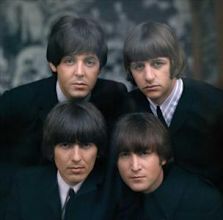
Penny Lane by The Beatles
Raspberry Beret by Prince
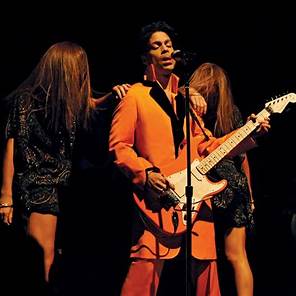
There are so many perfect upbeat pop songs out there. At the moment, off the top of my head, I’m thinking of “Another Nail for My Heart” by Squeeze, “Starry Eyes” by The Records and “I Only Want To Be With You” by Dusty Springfield followed by hundreds of others. But I love these two songs not only for their poppy musical perfection, but also because of the similar stories they tell – of youth, of eyes wide open, of the small, simple beauties of the world. The details can only be authentic. In Prince’s formative days in Minnesota, there’s Mr. McGee’s five-and-dime, Old Man Johnson’s farm, the stunning, beret-capped honey brazenly, boldly, beautifully coming in through the out door; in McCartney’s Liverpool, we meet the barber, banker, fireman and pretty nurse all beneath the sheltering skies of Penny Lane. It’s true that Prince is singing about his first time, while McCartney is merely recalling a simpler time, and that all those times are long, long gone now. But they’ve been caught on record like French stolen gems in amber, everlasting.
These Days by Jackson Browne
Who Knows Where the Time Goes? by Sandy Denny

How is it possible that two of the most poignant, sure-footed, everlasting songs about world-weariness and regret were written by teenagers? While most of their successful contemporaries were singing about surfing, first love and da-doo-ron-ron, Sandy Denny (19) and Jackson Browne (16!) were creating these two stories that would go on to crest all the coming decades, recorded by dozens of others, never losing an ounce of their power, and settling in finally on the very top shelf of songdom. For Denny, “Who Knows . . .” was the second song she ever wrote. She first performed it with The Strawbs and later, more familiarly, with Fairport Convention. It was also the last song she sang in concert before she died, at 31, following a trouble-plagued end of life and a fatal fall down stairs. The song of course lives on, its strengths evident from the achingly familiar first lines (you’ve no doubt heard Judy Collins singing them):
“Across the morning sky all the birds are leaving,
Ah, how can they know it’s time for them to go?
Before the winter fire, we’ll still be dreaming,
I do not count the time.”
Meanwhile, Jackson Browne’s tribute to loss and regret demonstrates that perhaps no one is more attentive and sensitive to such things than a watchful teenager. “These Days” was first recorded in 1967 by Nico and since then by everyone from Cher to Fountains of Wayne to Drake and Miley Cyrus. Again, the opening lines hold up powerfully across the passage of time, capturing a somber, semi-alienated mood that most of us have perhaps known and understood:
“I’ve been out walking,
I don’t do too much talking these days,
These days . . . these days I seem to think a lot
About the things that I forgot to do
And all the things I had a chance to.”
A Whiter Shade of Pale by Procol Harum
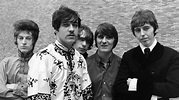
I’ve heard it hundreds of times by now, but I never get sick of “A Whiter Shade of Pale.” It may be the only song that I’ve heard so many times and yet still look forward to hearing again. I associate it with the summer of 1967, just after it was released and began its swift climb to the top of the charts. I was 17, working at Burger Chef and playing summer baseball, and certainly aware that the world out there beyond the dashboard of my Corvair was rapidly turning upside down. With its powerful vocal and melancholy organ, its talk of a light fandango, and turning cartwheels across the floor, and a room that was humming harder as the goddamn ceiling flew away (not to mention allusions to Chaucer and Bach), this was one of those songs that made me want to find out where everyone was going so I could go there myself. Somehow it still makes me feel that way.
Don’t Worry Baby by The Beach Boys
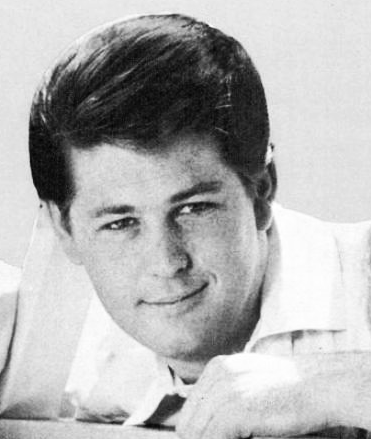
I was 15 in 1965 when my family arrived in California as part of an all-summer, cross-country camping trip. We set up at Doheny Beach and I witnessed with wide eyes all of California’s promises coming true: surfers, Hell’s Angels, Disneyland, movie studios and even luminescent surf at night. Brian Wilson was central to all of this. A lot of boys my age wore wide-striped shirts and that summer’s hit, “California Girls,” filled the airwaves. I’d already been listening to the Beach Boys’ magic for a couple of years, and I’d continue for the rest of my life. As time went on back in my East Coast home, I came to fully appreciate Wilson’s talent and commiserate with his unsteady state of mind. And my favorite song of all, the flip side of 1964’s “I Get Around” that I hadn’t properly noticed at the time, was this creamy riff on teen insecurity. The song is half “Be My Baby” and half “Rebel Without a Cause,” but it’s all Brian Wilson. He takes the lead, paints the harmonies and tells the story of the boy who brags about his car, gets challenged to a dangerous race and finds reassurance, and more, in the arms of an unnamed fantasy angel. Some of his later songs won more acclaim, but this one was a flawless coming attraction of his blossoming genius.
Paint It Black by The Rolling Stones
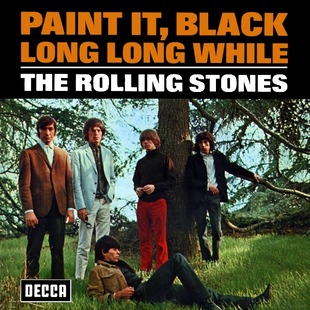
From rock ‘n’ roll’s very beginning, part of its attraction – and horror – was its sense of menace. The insistent bass, pounding drums, scorching guitars and urgent vocals all signaled danger – a wrong, reckless turn taken somewhere and possibly some good booze and unwise sex just up around the bend. The Rolling Stones were experts at mood and menace. From the start, they didn’t wear ties and jackets on stage like the other boys did, they appeared sullen with lit cigarettes on album covers and they played with a bluesy abandon that most other bands could rarely muster. With “Paint It Black” they laid out the startlingly unhinged story of someone who’s lost his love, seen her buried, and then plunged into an abyss of his own. He wants everything painted black. He wants the sun blotted out from the sky. He’s gone psycho. Meanwhile, the music, with its droning sitar, propulsive Middle Eastern vibe and Jagger’s snarling vocal never lets up. Overall, it’s as menacing a #1 pop hit as there’s ever been. I’ll never forget cueing up the Stones’ brand new “Aftermath” album in a summer lake cottage in 1966 and getting hit with this as the opening cut. For me, it turned out to be the song of the summer, and beyond.
Waterloo Sunset/Days by The Kinks
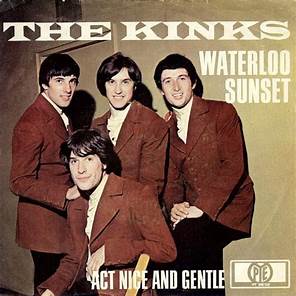
The Kinks get a double entry because I love them and always have. Back in 1964-65, it was briefly a cool thing (among 14-year-olds) to claim to prefer someone else over The Beatles. For me, it was The Kinks. It began with the fantastic one-two power punch “You Really Got Me” and “All Day and All of the Night” but soon expanded, via Ray Davies’ vision, into songs of social commentary and a wistful longing for simple English pleasures and sunny afternoons. Into that mix came “Waterloo Sunset,” with its dirty old river, busy underground station, and mysterious Terry and Julie, all observed from afar by the flat-bound introvert at his window. It beautifully evokes the quiet enjoyment, even paradise, of being the observer rather than the participant, the play-watcher instead of the actor. Meanwhile, “Days” is a song that grows richer and more meaningful with time. A thank-you from Davies to his older sisters, who introduced Ray and his younger brother and future bandmate, Dave, to the pop music and dance halls of their youth, the song can serve also as a general thank-you to all we’ve met and loved in our lives. During a recent serious illness, I confided to my brother that this was the song I’d like him to sing to close out my memorial service, if it came to that. It didn’t, and soon after I read that this is what Ray Davies wants played at his own send-off. I suppose he wouldn’t mind if we both did it. But being Ray, maybe he would.
Can’t Find My Way Home by Blind Faith
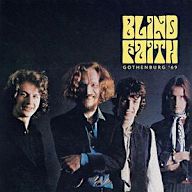
It seems that Steve Winwood was 20 when he wrote this song, and I was 19 when I first heard it, in 1969, so maybe that’s why it’s stayed with me for so long: the brother scored a direct hit on me. I do know it’s another of those songs that, 55 years later, I still never get tired of hearing. Winwood’s plaintive vocal (remember, at 17 he’d been the voice of The Spencer Davis Group and “Gimme Some Lovin’) and maybe half-true situation (“I’m wasted, and I can’t find my way home”) spoke directly if a little hazily to my occasionally-immobile status: a candlelit room, me one or two over the line, curled up on a ratty couch, wondering by what clever devising I could get myself all the way across the room for a book of matches. Winwood may have had higher themes in mind (“come down off your throne and leave your body alone”), but I certainly did not.
Angel From Montgomery by Bonnie Raitt

Released in 1974, this is probably most people’s favorite version of the John Prine classic. Bonnie Raitt inhabits the “old woman” at the song’s center, the one dealing with a mountain of regret and who longs for escape but knows she’ll never manage it. She calls out for an angel to take her away from her broken life in Mongomery, or maybe just an old rodeo poster – anything to change up the emptiness of what she’s got now. Raitt’s reading of the song’s crowning lines (about the woman’s hopeless disappointment of a husband) is heartbreakingly perfect:
“How the hell can a person
Go to work in the mornin’
And come home in the evenin’
And have nothin’ to say?”
The subject matter of Prine’s best songs might be tagged as Kitchen Sink Songwriting, after the British cultural movement of the 1950s that included plays, movies and novels. Plain talking working class people, angry or disillusioned or down on their luck or just growing old, trying to find someone, or something, to hold onto. Nobody tells their stories better than Prine.
Then He Kissed Me by The Crystals
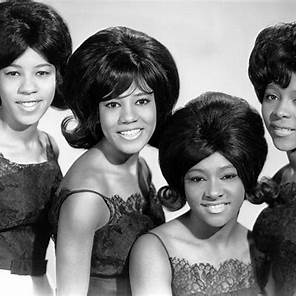
I remember hearing this song for the first time on the radio, grabbing a dollar from somewhere (probably my mother’s pocketbook) and running down the hill all the way to the center of town, beelining to the record shop, buying the .45 and then running back up the hill, returning home and putting it straight onto our turntable. At the time, 1963 (I was 13), I’m sure I never would have figured out why I’d acted so impulsively, but gradually it came to me: It was the first song ever to hit me below the belt. The thundering Phil Spector wall of sound, the sweet heat of the Ellie Greenwich, Jeff Barry lyrics and the exuberant lead vocal of Dolores “La La” Brooks moved me in ways I wasn’t familiar with. And when she freely confesses that she “gave him all the lovin’ I had,” I wasn’t quite sure what to think. There are many wonders in Spector’s stable, of course, some of the best stuff in the world, but this was the first for me, and you always remember the first one.
Stay in My Corner by The Dells
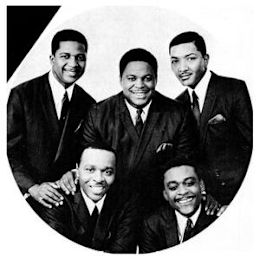
How good were The Dells? They were so good that in 1966 they were hired to open for Ray Charles during his concert tour but were summarily fired after one of their performances resulted in several standing ovations. You just aren’t supposed to step on the headliner’s shadow. But the group by then probably knew that; they’d already been around since 1955 and had enjoyed one monster hit in “Oh, What a Night.” Another, “There Is,” would come in 1967. But my favorite has always been 1968’s “Stay in My Corner,” an earnest, soulful plea about a man, maybe a man in trouble, needing the love, comfort and steadying presence of a woman. Most impressive and memorable about the song is the vocal of Marvin Junior, the group’s powerful, husky voiced baritone, who at one point hits a big, big note and stays on it for 17 seconds. Showing off, yeah, but why wouldn’t he?
Grapefruit Moon by Tom Waits
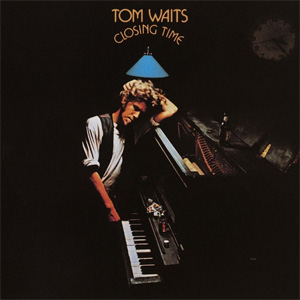
No, I probably don’t know what this song is about, but it’s Tom Waits, and a rough and gorgeous sort of poetry, so I’ll just go along for the ride. This is one of the many lovely, smoky, melancholy songs to be found on Waits’ 1973 debut album, “Closing Time.” It’s easy to picture yourself seated, a drink in front of you, at a small table in an intimate half-empty jazz club, the guy up front bent over the keyboard, singing to himself, unable to forget:
“Grapefruit moon, one star shining,
Shining down on me,
Heard that tune, and now I’m pining,
Honey, can’t you see?
‘Cause every time I hear that melody
Well, something breaks inside,
And the grapefruit moon, one star shining,
Can’t turn back the tide.”
I’d love to know what the “melody” he’s talking about is, but I try not to let it bother me. Maybe he’s summoning Humphrey Bogart’s Rick Blaine in “Casablanca,” tortured by the memory of a woman and a particular song they shared. In any event, this tune, as with a number of Waits’ best, should be much more heard than it is.
Fast Car by Tracy Chapman
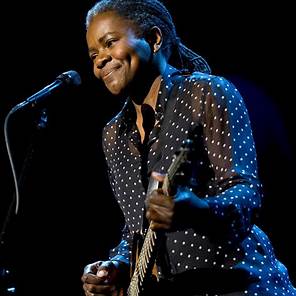
I don’t think I’ve ever felt for someone in a song the way I felt for the singer of this one when I first heard it. Trapped unfairly in a world she didn’t create, caring for an alcoholic father after her mother ran off, she longs for escape – and not just in any car, but in a fast car. She succeeds, with a wonderful, fleeting, euphoric feeling of freedom, only to soon face new challenges in her new town. The cycle is hard to break but her continuing hope for a better future remains in a way that breaks your heart:
“So remember when we were driving, driving in your car,
Speed so fast I felt like I was drunk,
City lights lay out before us
And your arm felt nice wrapped ‘round my shoulder,
And I had a feeling that I belonged,
I had a feeling I could be someone, be someone, be someone.”
Chapman was a largely unknown folk performer in 1988 when she was invited to perform three songs at the enormous Nelson Mandela’s 70th Birthday Tribute at Wembley Stadium in London, broadcast to an estimated audience of 600 million in 67 countries. She did her set, but when Stevie Wonder refused to appear following an equipment malfunction, she was called out again to help fill the gap. She sang “Fast Car,” and it, and she, became a hit.
White Rabbit by Jefferson Airplane
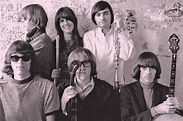
The “drug” songs of the 1960s usually weren’t hard to miss. “Mr. Tambourine Man,” “Journey to the Center of Your Mind,” “One Toke Over the Line” and “Lucy in the Sky with Diamonds” all served as invitations to join the party. At the top of this heap was “White Rabbit.” With its flying-high vocals from Grace Slick (who wrote the song), a seductively mounting, “Bolero”-like musical backdrop and imploring, trippy, “feed your head” lyrics, “White Rabbit,” clocking at a mere 2:31, rang out like a clarion call to all the boys and girls to begin ingesting drugs. In fact, in retrospect it’s amazing that American radio programmers ever allowed it enough airplay for it to become a hit. But it’s also a great, urgent rock song, impossible to forget.
Stand! by Sly & the Family Stone
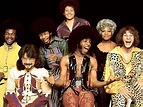
My favorite concert of all time was Sly & the Family Stone at Dartmouth College, Oct. 11, 1969. The fieldhouse was packed, and the band was at the peak of its power. They came roaring out onto the stage and the first word of the first song they sang was “Stand!” So that’s what we all did, up onto our folding chairs, where we stayed standing and dancing, spellbound really, for the entire concert. Later, the business manager of the college’s student center wrote to the band, “The concert obviously was a financial success from the standpoint of Sly, but not a success for us. The major factor was that for the first time in our concert presentations, the entire audience stood on metal chairs, thereby scraping off all the paint. Repainting costs are estimated at $2,000 to $2,500.” Such was the irrepressible nature of this band in the fall of 1969. You couldn’t stay seated. And this song, poppy and funky with horns, multiple vocals and an uplifting message, made sure you didn’t. It opens:
“Stand!
In the end you’ll still be you
One that’s done all the things you set out to do
Stand!
There’s a cross for you to bear
Things to go through if you’re going anywhere
Stand!
For the things you know are right
It’s the truth that the truth makes them so uptight.
Stand!”
America by Simon & Garfunkel
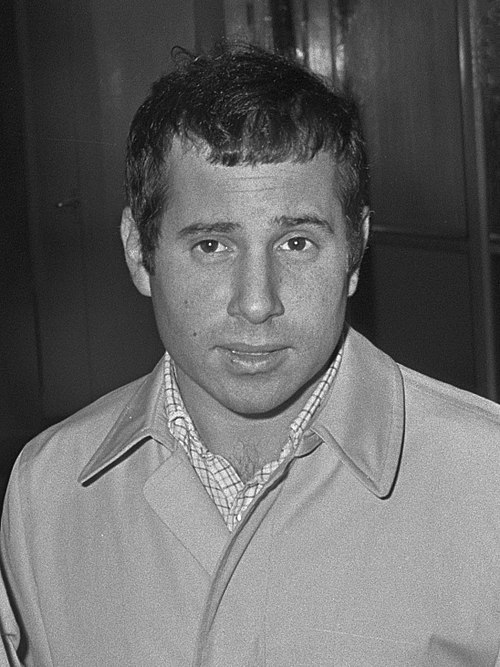
Paul Simon later named one of his solo albums “Here Comes Rhymin’ Simon,” but there are no rhymes to be found on this masterwork, most unusual for a hit pop song in 1968. The movies have a genre called “Coming of Age,” and of course virtually all hit pop and rock records could go into a basket with that label. But this song is so poignant and evocative that it deserves a label all its own. Hitchhiking, riding the Greyhound, smoking cigarettes, reading magazines – the couple here is giddily in first love. They have become the center of all things. Life is now a movie for them to watch and comment on while scarfing down a Mrs. Wagner pie. But maybe, as the moon rises over an open field, the truth runs deeper: “Kathy, I’m lost,” the singer says, though he knew she was sleeping. “I’m empty and aching and I don’t know why.” So the kids may be out there bouncing dizzily off each other and looking for America, but what they’re really looking for is themselves. Again, not an uncommon theme, but Simon, and Garfunkel, cover it brilliantly.
Four Strong Winds by The Chad Mitchell Trio
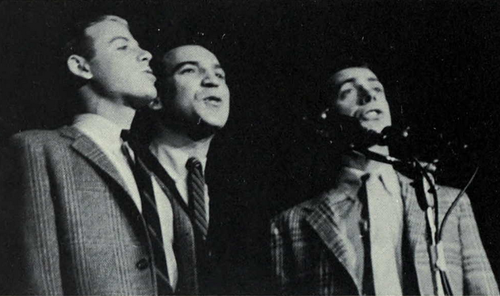
This is said to be the first song ever written by Ian Tyson, later of Ian & Sylvia. He claimed to have written it in 20 minutes in his manager’s New York apartment after hearing Bob Dylan play. “Four Strong Winds” feels so strong and everlasting, and it’s Canadian to its very core. The story is simple: a man in Canada, footloose and “bound for movin’ on,” has decided to head west to Alberta for work, but he kind of wants to bring someone with him who just doesn’t want to go. He’ll go anyway because for some unknown reason he has to, but he leaves with the classic born-to-be-broken promise that “I’ll look for you if I’m ever back this way.” I guess they just didn’t want each other enough. The song has been recorded countless times, most notably by Ian & Sylvia and later by Neil Young, but this is my favorite version. The singer somehow conveys the vastness of Canada, the distances to travel, the snow, the cold, the loneliness. On the darkest nights out there on the plains, if you sit still long enough this is the song you might hear on the wind.
Don’t Think Twice, It’s All Right by Bob Dylan
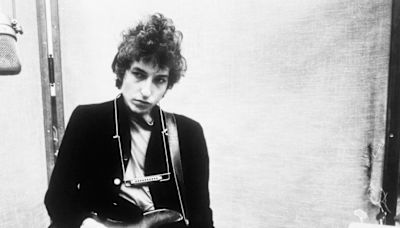
Early Dylan has always been great for me. I guess I first heard this song when I got “The Freewheelin’ Bob Dylan” as part of a 6-for-$1.99 Columbia Record Club haul, along with albums from the likes of The New Christy Minstrels, Ferrante & Teicher and Allan Sherman, probably in 1964. “Don’t Think Twice” is riveting. It conveys the sting of an abandoned soul, someone who’s hurt and bitter and lashing out, but who still harbors feelings, and maybe even faint hope, for the one who’s sent him into the cold. It opens with a goodbye note (“When your rooster crows at the break of dawn/Look out your window and I’ll be gone”), then moves to a briefly warming thought (“But I wish there was something you would do or say/To try and make me change my mind and stay”), before moving to the extraordinary kiss-off (“You could’ve done better, but I don’t mind/You just kinda wasted my precious time”). It was unafraid and personal, very personal, in a way you just didn’t hear back in those days.
No Woman, No Cry (Live) by Bob Marley and The Wailers
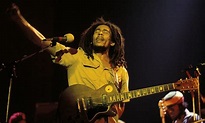
I can never hear this song without thinking of “Georgie,” who would “make the fire light” in the government yard in Trenchtown. These days it’s easy to do a search to find out who he was, but for many years he was a mystery to me, and I often wondered what he thought of being called out like that in a famous Bob Marley song. (As it turns out, I don’t think he thought much about it at all.) I do wonder about all the others, though, in “Rikki Don’t Lose That Number,” “Martha My Dear,” “Maybelline,” “Judy in Disguise” and a million other songs. Are they real people or fake? If real, what do they think of it all? Lots of stories there, I’m sure. Meanwhile, the live version of “No Woman, No Cry” was recorded in 1975 before an adoring crowd at the Lyceum Theatre in London. In it, Marley tries to stem the tears of a woman, an old friend, by recalling earlier days together in Kingston and trying to paint a brighter picture of the future by repeatedly telling her, “Everything gonna be all right.” Marley could be very combative and dark in many of his songs, but he was good at sunshine too, as here and “One Love” and “Three Little Birds” (again with “Every little thing gonna be all right”). Taken down by skin cancer at 36, this was a terribly ironic refrain to find its place in multiple songs.
Help! by The Beatles
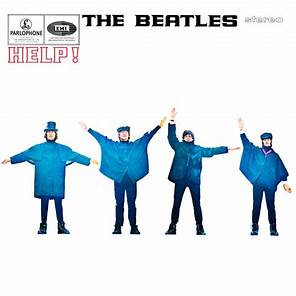
I often think that if I had to name my favorite Beatles album it would be the double entry of “A Hard Day’s Night” and “Help” – the British version of both. Here, the boys are just starting out, dumping the training wheels of covering American R&B classics, and seeing what they can do with their own pop-infused sound. Which was a lot, of course. They were young, too, and filled with boyish energy and charm. When “A Hard Day’s Night” was released, their ages were 21 (G), 22 (P), 23 (J) and 24 (R). It was their first album to contain all original songs, 13 of them in 30 minutes, and each perfectly capturing their spirit and talent. A year later came “Help!” with its own stunning lineup. Leading the way was the title song, an unforgettable upbeat cry for help from John Lennon (not his last cry). According to Wikipedia, Lennon was always proud of “Help!”, even once calling it his favorite. He felt it was one of his “real” songs, explaining, “The whole Beatle thing was just beyond comprehension. I was eating and drinking like a pig, and I was fat as a pig, dissatisfied with myself … later, I knew I was really crying out for help. So it was my fat Elvis period.” A cry for help and a pop masterpiece.
The Goodbye Look by Donald Fagen
Donald Fagen’s “The Nightfly” is, after all is said and done, my favorite album. It was released in 1982 as a solo effort after Steely Dan broke up for the first time in 1981. The eight songs, impeccably performed and produced, tell stories from Fagen’s adolescence, which coincides almost exactly with my own. He was New Jersey, I was Connecticut, but we both leaned very heavily toward New York City for our entertainment, information and inspiration. He was probably more sophisticated, apparently listening to jazz radio stations while I tuned into the 50,000-watt signal of the Top 40 on WABC. I’d wager we both loved Jean Shepherd’s nightly 45 minutes on WOR-AM and maybe he joined me from afar with Chuck McCann’s Sunday funnies and Zacharly’s movie hosting on TV. Anyway, back to “The Nightfly.” Every track serves as a chapter or short story from Fagen’s formative years. I just happen to enjoy “The Goodbye Look” the most, as it very colorfully evokes what seems to be a military coup on an unnamed Caribbean island (let’s call it Cuba), and the dangers for an American who may have overstayed his visit. It’s the product of a kid who kept his ear tuned to what was going on “out there” when he was young. In that sense, I think of Fagen as Mr. East Coast and Brian Wilson as Mr. West Coast, making music from the vibe they felt as they lay in bed, eyes wide open, late, late at night.